
Location: Glen Ellyn
Land Design & Construction, Inc. is a planning, design and construction company in Glen Ellyn.
22W140 Glen Valley Dr, Glen Ellyn, IL 60137
A wood-deck proposal should identify the boards, supporting members, treatment and finish separately. Start with the appearance and use you want, then ask each contractor to describe the materials and responsibilities behind that result. A photograph or a broad label such as “wood decking” leaves too much open for a useful comparison.
Showing 1–3 of 3 listings.
Location: Glen Ellyn
Land Design & Construction, Inc. is a planning, design and construction company in Glen Ellyn.
22W140 Glen Valley Dr, Glen Ellyn, IL 60137
Leguizamo’s & Sons offers deck building, composite deck building and wood deck building.
EZ Tree Services LLC provides residential and commercial tree care, deck construction and fence construction.
Ask for the species or named product, grade, dimensions and intended use of each wood component. Separate the walking surface from posts, beams, joists, stairs and guards. If a proposal offers alternatives, have it identify exactly which components change.
Preservative treatment and a surface finish are separate specification questions. The American Wood Protection Association’s Use Category System organizes treated-wood uses by biodeterioration hazard to help select treatment suited to the intended exposure. Ask the contractor to identify the treatment and use category for the proposed application; a preferred stain color does not answer that question.
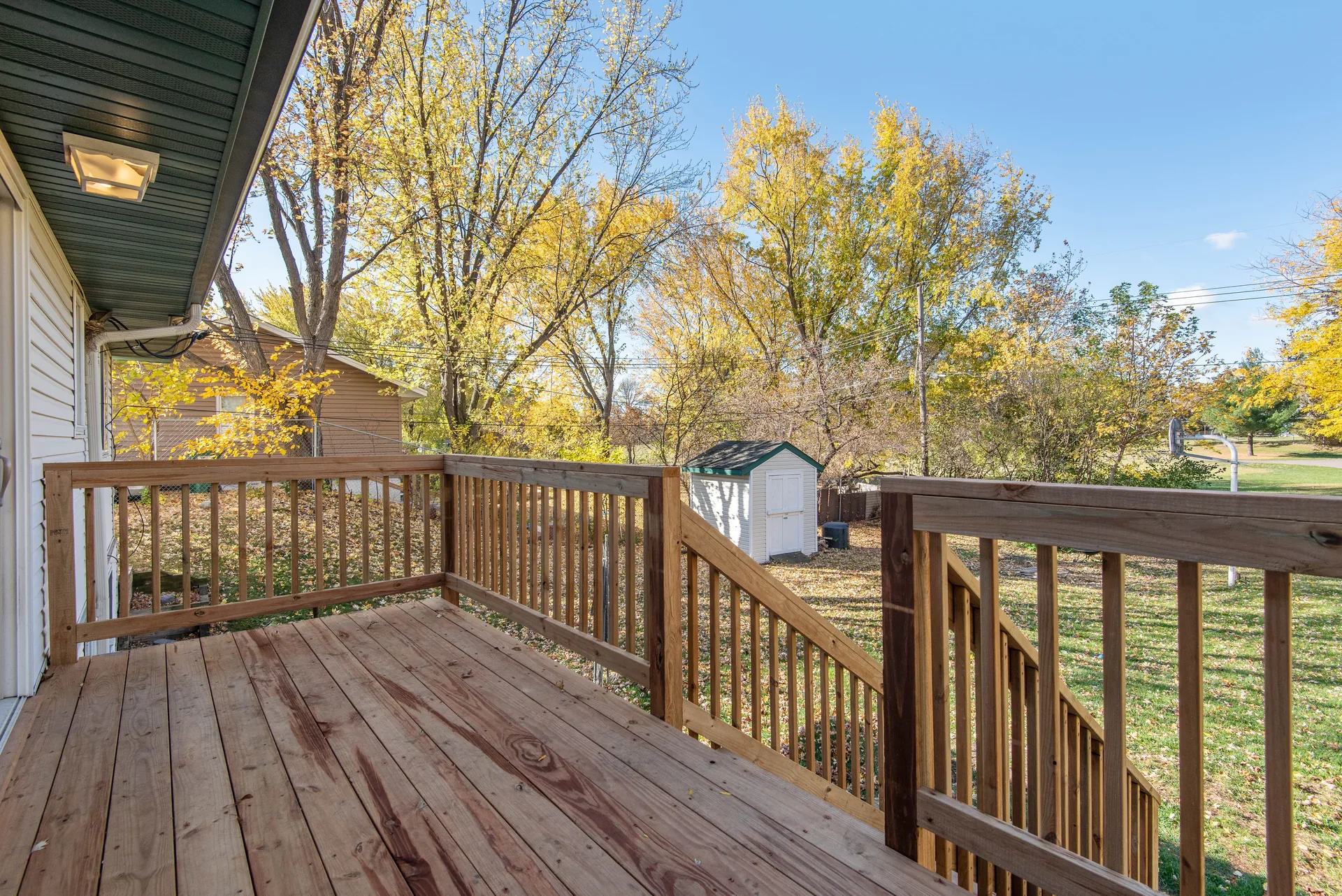
Illustrative stock photograph: board direction, guardrails and the stair opening are visible choices to discuss in a layout brief.
Moisture behavior deserves its own discussion, and color alone cannot settle a question about a deck’s condition. The USDA Wood Handbook explains that wood exchanges moisture with surrounding air according to humidity, temperature and its existing moisture content, affecting its properties and performance. See the handbook’s moisture discussion.
Ask how the proposed design and installation will accommodate the selected wood’s moisture condition. For waterborne preservative treatments, the handbook notes that treatment adds water and that drying and shrinkage may occur after installation unless the wood is kiln-dried after treatment. The preservative-treatment chapter provides that context; it does not establish a universal waiting period for finishing every product.
The handbook also distinguishes surface mold associated with humid air from conditions that support significant decay in previously dried wood, including wetting by rain, condensation or contact with wet ground. Its biodeterioration chapter explains those mechanisms. This distinction is useful when asking about drainage and wet areas, but it is not a way to declare a deck sound from its gray color, a photograph or a visual impression.
Choose a desired appearance, then ask for a finish and care plan matched to the actual wood and product instructions. Have the proposal state whether the deck will be delivered unfinished or with a named finishing system, and who will perform preparation and application.
For cedar specifically, the Western Red Cedar Lumber Association says a deck that dries after wetting lasts longer than one that stays damp. Its cedar care guidance includes drainage and keeping the surface free of debris. Treat that as cedar-specific guidance, rather than a lifespan promise or a cleaning schedule for every wood deck.
Use samples to discuss the appearance you prefer. Ask what changes to expect in the selected finish, which care instructions will be supplied and what work the owner will undertake. Avoid accepting an unspecified promise of “low maintenance” in place of those details.
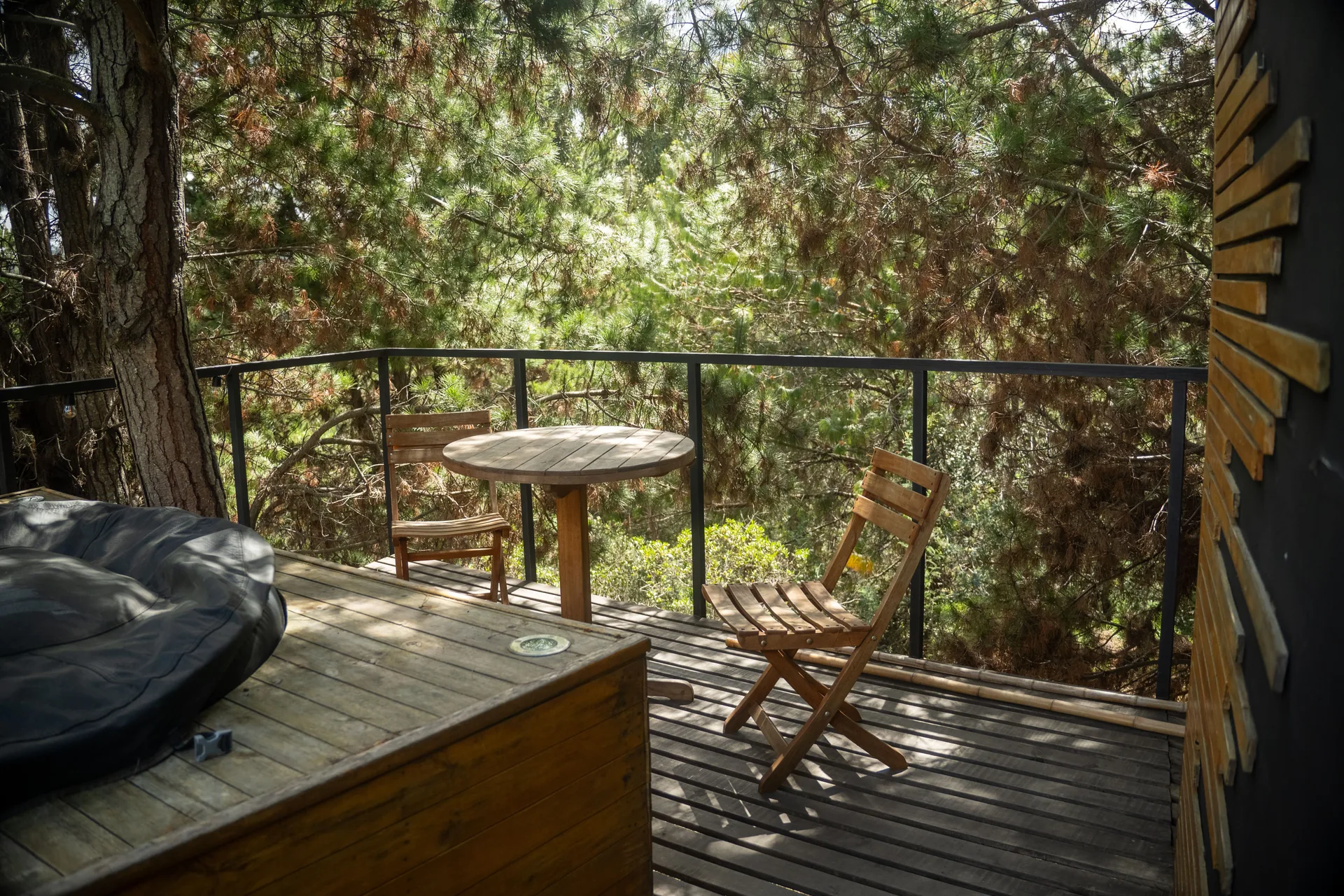
Illustrative stock photograph: a compact table and seating corner show one way to discuss furniture placement within a timber-deck layout.
A comparable proposal names the materials and assigns the work, including finishing and handover. Use a component schedule to make omissions and alternatives easier to discuss.
| Proposal item | Detail to request |
|---|---|
| Walking surface | Species or product, grade, board dimensions and finish |
| Supporting structure | Separate material and treatment specifications for each member type |
| Connections and exposed ends | Connection details and responsibility for any specified field treatment |
| Stairs and guards | Included components, materials and finish scope |
| Finishing and handover | Preparation, application responsibility and product care documents |
The Illinois Attorney General recommends obtaining written estimates based on the same work. Use the same component schedule when approaching companies for wood deck construction, and ask each to mark exclusions and substitutions explicitly. That gives you a clearer basis for choosing a proposal than comparing the headline description alone.
Enquiries through this directory are unavailable. Use each profile’s published contact details.